Effective Cleaning and Disinfection Strategies for Medical Facilities to Ensure Compliance
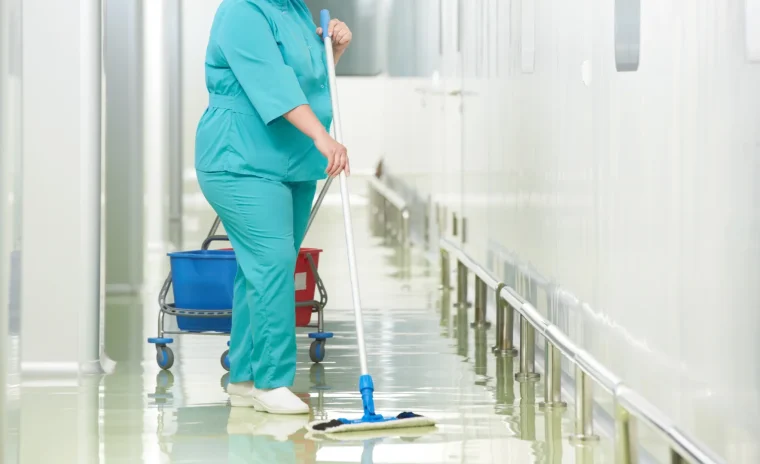
Master Medical Facility Cleaning and Compliance in Chicago, IL
Meeting Regulatory Standards Through Evidence-Based Protocols
Expert protocols for safe facilities
Understanding Medical Facility Compliance Standards and Regulatory Requirements
Medical facilities in Chicago operate under strict oversight from multiple regulatory agencies, each enforcing specific sanitation and infection control standards. The Centers for Disease Control and Prevention (CDC), the Occupational Safety and Health Administration (OSHA), and the Joint Commission establish baseline requirements that every healthcare environment must meet. Understanding these frameworks is the first step toward maintaining compliant operations.
The CDC’s Guidelines for Environmental Infection Control in Health-Care Facilities provide the foundation for most cleaning protocols. These guidelines categorize surfaces by risk level: critical surfaces that contact sterile tissue or the vascular system, semi-critical surfaces that touch mucous membranes, and non-critical surfaces that contact intact skin. Each category demands a specific level of disinfection. OSHA standards focus primarily on protecting healthcare workers from bloodborne pathogens and hazardous chemicals, requiring facilities to maintain Safety Data Sheets for all cleaning agents and to train staff on proper handling procedures.
Chicago’s medical institutions face unique challenges during the winter months, when flu season and respiratory illness surges place additional pressure on infection control protocols. High patient volumes in emergency departments and urgent care clinics demand more frequent terminal cleaning of exam rooms and waiting areas. Many facilities in the metropolitan area serve diverse populations, which means communication barriers can complicate training efforts and necessitate multilingual signage and procedural documentation.
Compliance extends beyond daily cleaning routines. Facilities must maintain detailed logs documenting cleaning schedules, products used, and staff responsible for each task. These records serve as evidence during inspections and accreditation reviews. The Joint Commission’s unannounced surveys evaluate not only the physical cleanliness of the environment but also the presence of written policies, staff competency verification, and corrective action records. A single gap in documentation can result in conditional accreditation status, which affects reimbursement rates and patient confidence.
For facilities that lack dedicated environmental services staff or need specialized support, partnering with a commercial cleaning service experienced in healthcare protocols can ensure continuous compliance while freeing clinical staff to focus on patient care.
Essential Disinfectants and Cleaning Agents Approved for Healthcare Settings
Selecting the appropriate disinfectant is not a matter of preference but of regulatory requirement and microbial efficacy. The Environmental Protection Agency (EPA) maintains a list of registered antimicrobial products approved for use in healthcare settings, categorized by their kill claims and contact times. Only EPA-registered disinfectants with healthcare-associated infection claims should be used in medical facilities, and each product must be applied according to its label instructions to achieve the stated efficacy.
Hospital-grade disinfectants fall into several chemical families, each with distinct advantages and limitations. Quaternary ammonium compounds, commonly called quats, are widely used for routine environmental cleaning due to their low toxicity and minimal odor. However, quats have limited efficacy against non-enveloped viruses and spores, making them unsuitable for terminal disinfection in isolation rooms. Sodium hypochlorite solutions, or bleach-based disinfectants, offer broad-spectrum killing power and are effective against Clostridioides difficile spores when used at appropriate concentrations, typically 5,000 parts per million for high-risk areas. Hydrogen peroxide-based disinfectants provide intermediate-level disinfection and are gentler on surfaces than bleach, though they require longer contact times.
Contact time, the period a surface must remain visibly wet with disinfectant, is often overlooked but critical to compliance. A product with a ten-minute contact time that is wiped dry after two minutes has not achieved disinfection, regardless of its chemical potency. Staff must be trained to apply sufficient product to keep surfaces wet for the entire contact time listed on the label. In fast-paced clinical environments, this often means selecting products with shorter contact times, even if they cost more per gallon.
Chicago’s older healthcare buildings, many constructed in the early twentieth century, often feature porous surfaces like unsealed terrazzo or aging tile grout that can harbor pathogens and degrade when exposed to harsh chemicals. Selecting pH-neutral or mildly alkaline disinfectants helps preserve these surfaces while still achieving the necessary microbial reduction. Compatibility testing should be conducted before introducing new products to avoid damaging expensive medical equipment or facility finishes.
Facilities should also maintain a matrix that maps each disinfectant to its appropriate use case, ensuring staff select the correct product for the task at hand. When deep cleaning or terminal disinfection is required, specialized sanitation services with expertise in healthcare environments can provide the necessary equipment and training to execute protocols correctly.
Step-by-Step Disinfection Protocols for High-Touch Surfaces and Equipment
High-touch surfaces in medical facilities serve as vectors for pathogen transmission and require disinfection multiple times per shift. Door handles, light switches, bedrails, call buttons, keyboards, and medical device touchscreens accumulate bacterial and viral contamination rapidly, especially in high-traffic areas. A systematic, documented approach to disinfecting these surfaces is essential to break the chain of infection.
The proper sequence begins with cleaning, not disinfection. Organic matter such as blood, respiratory secretions, or soil inactivates many disinfectants and must be removed before antimicrobial agents are applied. Use a detergent solution and a clean microfiber cloth to remove visible contamination, working from cleanest to dirtiest areas to avoid cross-contamination. Dispose of the soiled cloth in a designated receptacle and do not reuse it on another surface.
Once the surface is clean, apply the EPA-registered disinfectant using a spray bottle or pre-saturated wipe. Ensure the product is compatible with the surface material; alcohol-based disinfectants can damage acrylic screens and certain plastics found on infusion pumps and monitors. Apply the disinfectant liberally enough to keep the surface wet for the full contact time. For a product with a four-minute contact time, the surface should glisten with moisture for the entire four minutes. Prematurely wiping or allowing the surface to air-dry before the contact time elapses negates the disinfection process.
In Chicago’s academic medical centers and specialty clinics, complex equipment such as ultrasound machines, IV poles, and mobile workstations present unique challenges. These items move between patient rooms and require disinfection after each use. Establish a color-coded system of cleaning cloths or wipes to prevent cross-contamination: one color for general surfaces, another for patient care equipment, and a third for restrooms. Train staff to disinfect all surfaces of mobile equipment, including wheels and handles, which are frequently overlooked.
Documentation is as important as execution. Many facilities use electronic tracking systems or paper checklists to record the time, date, and staff member responsible for each disinfection cycle. During audits, these logs demonstrate adherence to protocols and help identify gaps in compliance. For facilities managing high patient volumes or complex equipment inventories, partnering with professional cleaning services that specialize in healthcare environments ensures that disinfection protocols are executed consistently and documented thoroughly.
Training and Documentation Practices for Ongoing Compliance
Preventing cross-contamination requires more than selecting the right disinfectant; it demands a systematic approach to workflow, equipment management, and environmental zoning. Medical facilities must establish physical and procedural barriers that prevent pathogens from moving from contaminated areas to clean areas, from patient to patient, or from surfaces to staff.
Zoning is a fundamental infection control strategy. Divide the facility into distinct areas based on contamination risk: patient care zones, clean utility rooms, soiled utility rooms, and public spaces. Each zone requires different cleaning frequencies and protocols. Patient care zones demand disinfection after each patient encounter, while public waiting areas may be cleaned on a fixed schedule throughout the day. Clearly mark these zones and train staff to follow directional workflows that move from clean to dirty, never the reverse.
Equipment segregation is equally critical. Use dedicated cleaning tools for each zone and never transfer a mop, bucket, or cloth from a patient bathroom to a hallway or from an isolation room to a general medical-surgical unit. Color-coded systems provide visual cues that reduce the risk of inadvertent cross-contamination. Red carts and tools for isolation rooms, blue for general patient areas, yellow for restrooms, and green for administrative spaces create an intuitive system that works even in high-pressure situations.
Personal protective equipment (PPE) must be donned and doffed according to established sequences to protect both the worker and the environment. Staff cleaning isolation rooms or areas contaminated with infectious material should wear gloves, gowns, and eye protection. Upon exiting the room, remove PPE in the correct order (gloves first, then gown, followed by eye protection) and perform hand hygiene immediately. Contaminated PPE must be disposed of in designated receptacles within the contaminated zone, not carried into clean areas.
Hand hygiene remains the single most effective measure to prevent cross-contamination. Healthcare cleaning staff should perform hand hygiene before and after each cleaning task, after removing gloves, and any time they touch a potentially contaminated surface. Alcohol-based hand sanitizers are effective for most situations, but soap and water are required when hands are visibly soiled or after contact with spore-forming organisms like C. difficile.
Chicago’s diverse healthcare landscape, from large hospital systems to small outpatient clinics, requires tailored infection control strategies. Smaller facilities may lack dedicated environmental services departments and benefit from external support to implement and maintain these protocols. Professional cleaning services trained in healthcare infection control can provide the specialized knowledge and staffing needed to maintain consistent, compliant practices across all shifts and patient volumes.
Professional Support for Medical Facility Compliance
Compliance in medical facility sanitation depends on well-trained personnel who understand both the science of disinfection and the regulatory framework governing their work. Staff turnover in environmental services roles averages 30-40% annually across Chicago healthcare institutions, making continuous training programs a regulatory necessity rather than an administrative preference. The Joint Commission requires documented competency verification for all personnel performing cleaning and disinfection tasks, with initial training followed by annual refresher courses and competency assessments.
Effective training programs must cover pathogen transmission routes, proper personal protective equipment use, chemical safety and dilution protocols, contact time requirements for various disinfectants, and the specific procedures for cleaning isolation rooms, operating theaters, and patient care areas. During Chicago’s seasonal influenza surges (typically December through March), facilities often implement enhanced training modules addressing respiratory pathogen control and accelerated disinfection schedules for waiting areas and examination rooms.
Documentation serves as the backbone of regulatory compliance, providing verifiable evidence that protocols were followed correctly. Facilities must maintain logs recording the date, time, location, products used, and staff member responsible for each cleaning and disinfection cycle. Many Chicago medical institutions have adopted electronic documentation systems that integrate with facility management software, allowing real-time compliance monitoring and immediate identification of missed cleaning cycles or protocol deviations.
Audit readiness requires organizing documentation in a manner that allows rapid retrieval during regulatory inspections. This includes maintaining material safety data sheets for all cleaning products, EPA registration numbers for disinfectants, manufacturer instructions for use, staff training certificates, competency assessment records, and incident reports documenting any potential contamination events or protocol breaches. Facilities that partner with specialized commercial cleaning services benefit from professional documentation systems and training programs that meet regulatory standards while reducing the administrative burden on internal staff.
